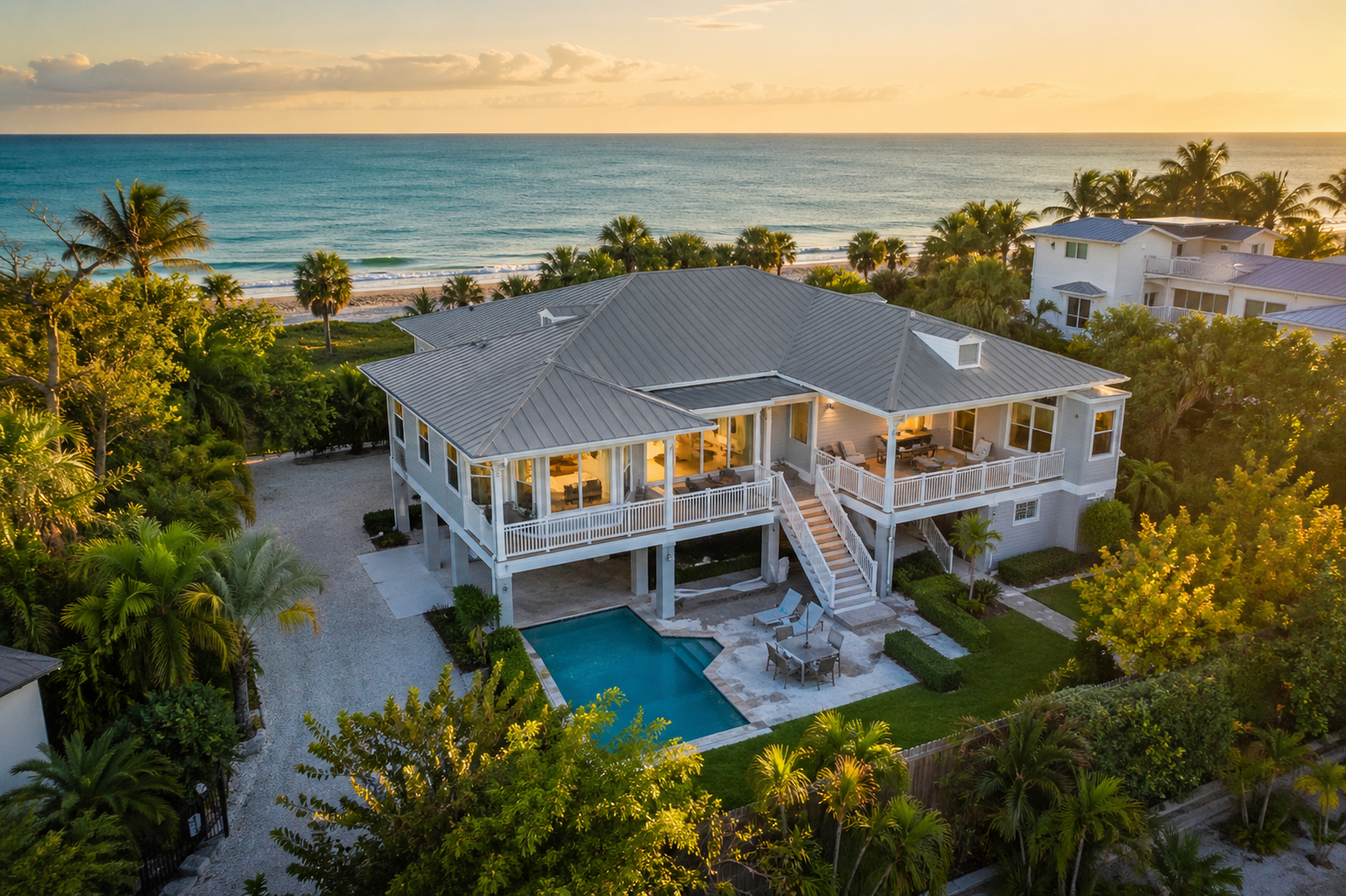
Most buyers approach a short-term rental the same way they approach buying a house. They look at the square footage, the price per foot, and what sold nearby.
That is exactly where costly mistakes get made.
A short-term rental is not just a piece of real estate. It is an operating business with income history, compliance requirements, insurance obligations, and guest-facing standards. The numbers that matter are not always the ones on the listing sheet.
After 150+ vacation rental transactions across Indian Rocks Beach, Indian Shores, Madeira Beach, Treasure Island, and Clearwater Beach, I developed the Haydon SHORE™ STR Investment Framework. It is the evaluation system I use with every buyer and every seller to make sure the decision is grounded in income potential, risk exposure, and long-term value, not emotion and not someone else’s estimates.
“Every STR purchase or sale decision I make with a client is evaluated through the Haydon SHORE™ Framework. It protects financing, reduces risk, and aligns expectations with what the property can actually do.”
— Cyndee Haydon, CRS, ABR, SRS, RENE, RSPS, CLHMS, CIPS, SRES | Future Home Realty | Pinellas Gulf Beaches
Key Takeaways
- SHORE™ stands for Supply and Demand, Hosting and Rental Rules, Operating Economics, Risk and Resilience, and Experience and Earnings Potential.
- Each letter represents a category of decisions that directly affects income, value, and long-term ownership costs.
- The framework applies to buyers evaluating a purchase, sellers positioning a property, and investors reviewing an exit.
- Skipping any one element is where expensive mistakes happen.
- The Haydon SHORE™ Framework is used across all Pinellas Gulf Beach markets: Indian Rocks Beach, Indian Shores, Madeira Beach, Treasure Island, and Clearwater Beach.
Where SHORE™ Came From
The framework did not start with a whiteboard. It started with a family.
I had helped the same clients six times over 15 years. Their first short-term rental. The sale that funded the next one. A move up to a larger property. Another exit. Each time, we worked through the same set of questions together, and each time they left feeling clear about the decision and confident about the value.
After the sixth transaction, I realized the system was living entirely in my head. I also knew from working with sellers I had not helped buy, that there were things they should have understood before they purchased. Decisions they made that cost them. Things they missed that they should not have missed.
My father was an engineer. My mother was a lifetime educator. I believe in empowering people through information. Putting the framework on paper was the only logical next step.
S — Supply & Demand
S — Supply and Demand
Supply and demand in a short-term rental market is not the same as supply and demand in traditional real estate.
In traditional real estate, you look at the number of homes for sale and the number of buyers. In an STR market, supply and demand means something more specific: will this property generate the guest demand it needs to produce the income you are expecting?
When Paying Full Price Is the Right Move
One of the most experienced STR investors I have worked with paid full asking price for a non-waterfront home in Indian Rocks Beach when it was listed at $750,000. At the time, that price was higher than non-waterfront homes typically commanded.
He did not overbid out of emotion. He studied the trend of guests choosing single-family short-term rentals over condos in Indian Rocks Beach, specifically guests who wanted the privacy and autonomy of a house without HOA rules limiting what they could do. He saw the income potential, trusted the numbers, and made the offer. Years later, he is still happy with that decision.
Strong demand does not automatically mean you should pay any price. But it does mean disciplined buyers can sometimes justify a price the traditional real estate market would not support.
“Strong demand does not justify overpaying. It justifies disciplined buying, especially in a tight inventory market like Indian Rocks Beach.”
— Cyndee Haydon, CRS, ABR, SRS, RENE, RSPS, CLHMS, CIPS, SRES| Future Home Realty | Pinellas Gulf Beaches
Supply Means More Than Listings
On the buy side, supply is about understanding what you would actually be purchasing. Does the property have a pool? That question matters more than most buyers realize. Adding a pool in today’s market can cost $100,000 or more. During construction, you lose rental income. After it is done, you still need to wait for bookings to reflect the new amenity. An appraiser in an older neighborhood might give that pool a $10,000 value increase. The market will eventually give it much more, but you are carrying the gap.
The same logic applies to furnishings. If the property is not a current short-term rental, you are starting from zero. In 2026, furnishing a home to a competitive short-term rental standard costs $50,000 or more. That cost, combined with the vacancy during setup, the photography, the listing build-out, and the ramp-up period before reviews come in, adds up fast.
“Appraisals are the bank’s pawn shop price for a piece of real estate. They matter if you are getting a loan, but they will not tell you what a pool will do for your rental income.”
— Cyndee Haydon, CRS, ABR, SRS, RENE, RSPS, CLHMS, CIPS, SRES | Future Home Realty | Pinellas Gulf Beaches
Post-Hurricane Supply Opportunities
After Hurricanes Helene and Milton, the Pinellas Gulf Beaches saw an unusual market condition. Supply of available properties increased at the same time that buyer demand softened. Some excellent short-term rental properties took an income hit during the repair and recovery period.
For buyers who understood that the underlying demand for Gulf Beach rentals had not changed, that window was an opportunity. The tourist demand, the repeat visitor base, and the appeal of the Gulf beaches did not go away. Properties that performed well before the storms were positioned to perform well again once they were restored and back on the market.
Supply on the Sell Side
When I represent an STR seller, supply means understanding the competition. Not all competing listings are equal. But if there are other performing short-term rentals nearby, we look at them closely. We get honest about where the subject property stands and build the case for why it deserves the price we are asking.
Part of that case involves the property’s own rental history. If it has been a short-term rental, the reviews tell you a lot. Parking issues. Neighbor complaints. Guest satisfaction. Cleanliness feedback. Those reviews give buyers information they cannot get from a CMA, and a clean five-star review history is one of the most powerful tools a seller has for defending value.
H — Hosting & Rental Rules
H — Hosting and Rental Rules
This is the letter that separates experienced STR advisors from agents who have never done this work before.
The rules governing short-term rentals on the Pinellas Gulf Beaches are specific, they are local, and they are constantly evolving. What is allowed in Indian Rocks Beach is not necessarily what is allowed in Redington Beach. What was compliant two years ago may not be compliant today.
The Unpermitted Repair Trap
After Hurricanes Helene and Milton, many property owners repaired their homes without pulling proper permits. Some did it to move faster. Some did not understand the consequences. In 2026, the City of Indian Rocks Beach sent letters to property owners asking where the permits were, knowing that nearly everyone had experienced flooding.
Here is why this matters to a buyer. Indian Rocks Beach has a short-term rental licensing and approval process. To obtain or maintain that license, the property must be compliant. Unpermitted work that violates FEMA’s 50% Rule guidelines for flood mitigation can force a buyer to bring the entire structure up to current code. That can mean elevating the foundation, rebuilding, or doing a full electrical and plumbing update.
A traditional agent who does not work this market may not even be aware this happened. A buyer who purchases one of these properties could face a compliance requirement not today, but two or three years from now when enforcement catches up. Once you own it, you own everything that comes with it.
“Knowing what happened in this community after the storms, and knowing how to verify that repairs were permitted correctly, is not something you can look up on a listing sheet. It is the kind of knowledge that only comes from working and living here.”
— Cyndee Haydon, CRS, ABR, SRS, RENE, RSPS, CLHMS, CIPS, SRES | Future Home Realty | Pinellas Gulf Beaches
Reviews as Due Diligence
Every short-term rental property that has been actively rented has a public record of guest experience. Read those reviews before you write an offer.
Reviews will surface things a home inspection cannot. Parking problems. Noise complaints. Pest issues. Neighbor friction. Guest concerns about layout or cleanliness. All of it is data.
I helped sell a non-waterfront Indian Rocks Beach property in 2026 that had a pool, a strong backyard, and a location a couple of blocks from the beach. It was not on the water. Some buyers saw that as a limitation. But every single guest had left a five-star review. We used that record to show buyers exactly what they were getting, including parking, privacy, the outdoor space, and the neighborhood experience. The reviews did the work a description could not.
Occupancy Limits and Quiet Hours
Many buyers coming from other markets assume that a nine-bedroom home means they can accommodate 20 guests. That is no longer how it works in most Pinellas Gulf Beach communities. Occupancy limits are specific, enforced, and tied to the licensing process. Noise ordinances and quiet hour requirements are real. Trash can placement and compliance are monitored.
If you are managing the property remotely, which most of my out-of-area clients do, you need a property management team that stays on top of all of this. We have resources for our clients in that area. It is not a reason to walk away from a property, but it is a reason to walk in prepared.
Dynamic Pricing and the 10% Rule
Short-term rental management companies that use dynamic pricing consistently outperform flat-rate approaches. In my experience working with clients across the Gulf beaches, dynamic pricing typically adds the equivalent of about 10% to annual revenue, which in many cases nearly covers the management fee itself. Knowing which management approaches work and being able to connect clients with the right resources is part of what we bring to every transaction.
Knowing Which Buildings and Towns Allow STRs
Along the 26 miles of Pinellas Gulf beaches from Clearwater Beach to St. Pete Beach, STR-friendly condos are limited. Knowing which buildings allow weekly rentals, which towns have licensing programs, which HOAs restrict frequency or occupancy, and which properties allow pets, is knowledge that comes from years of doing this work. The rules change. Staying current is part of the job.
O — Operating Economics
O — Operating Economics
This is where most first-time STR buyers get hurt. Not by the purchase price. By the numbers they did not run before they signed the contract.
The Seasonal Income Trap
The Pinellas Gulf Beaches have a highly seasonal rental market. February, March, and April run at close to 100% occupancy. Demand exceeds supply during those months. But that is not how the whole year looks.
Roughly two-thirds of annual rental income is earned in the first half of the year. The back half brings in about one-third. September and October are solid for locals but soft for destination travelers. Summers are more moderate.
The mistake happens when a buyer sees the spring numbers and tries to extrapolate them across 12 months. Someone shows them what March looked like, and suddenly the annual income projection is inflated by a significant margin.
I always tell clients: I am from Missouri. Show me the actual numbers. I want to see what a property has done, across all 12 months, ideally over multiple years.
“I want to see what somebody has actually done, not what someone estimates it might do. The exception is when I have done so many transactions in a specific building that I know what the right renovation produces, and I can introduce new clients to existing clients who have already lived the experience.”
— Cyndee Haydon, CRS, ABR, SRS, RENE, RSPS, CLHMS, CIPS, SRES| Future Home Realty | Pinellas Gulf Beaches
The $80,000 Savings That Is Not a Savings
Here is a scenario that plays out more often than most buyers realize.
Imagine two condos in the same building. One is fully renovated, turnkey furnished, has strong reviews, and is actively producing income. The other is minimally updated, empty, and has never been a short-term rental. The difference in list price is $80,000.
On a property listed at $800,000, that $80,000 looks like a deal.
Now run the full math. Furnishing a competitive Gulf beach condo in 2026 costs $50,000 or more. Renovating to a standard that supports strong nightly rates adds more. There is vacancy during setup. Professional photography. Listing build-out. Ramp-up time before you accumulate reviews and reach occupancy. If you are doing a 1031 exchange, the money you spend out of pocket during that process may be treated as boot by the IRS and taxed accordingly.
The “cheaper” condo often costs more by the time you open for business. And while you are getting there, the turnkey condo is producing income.
“Most investors do not lose money on the sale. They lose it in the buy, especially when they do not account for what it actually costs to get a non-performing property to a competitive operating standard.”
— Cyndee Haydon, CRS, ABR, SRS, RENE, RSPS, CLHMS, CIPS, SRES| Future Home Realty | Pinellas Gulf Beaches
When Higher Price Is the Better Investment
The highest-priced intracoastal home sale in Indian Rocks Beach during a recent period was a seven-bedroom short-term rental at $3.2 million. It was generating $650,000 a year in rental income.
It did not sell for $3.2 million because of comparable sales. It sold because of the income it could produce. The cap rate made the price rational in a way that a traditional residential CMA could not explain.
Do not discount a property because the number is large. Understand what it earns and what it costs to own. Sometimes the most expensive property on the street is the smartest investment in the portfolio.
The Friend-and-Family Booking Problem
One more scenario that catches buyers off guard. In Florida, if a seller has made personal bookings at low rates for friends and family, and those bookings were made by the owner directly rather than through a property manager, the buyer may be obligated to honor those bookings for up to 12 months after closing unless the issue is addressed before closing.
I have navigated this situation for clients. It requires specific contract language and clear communication during the transaction. An agent who has never worked through it will not know to look for it.
R — Risk & Resilience
R — Risk and Resilience
Risk is not just about today. It is about what a property costs you over time.
On a coastal barrier island, that conversation is more specific than it is anywhere else.
Flood Insurance: What Most Agents Miss
There are two insurance conversations every Gulf beach STR buyer needs to have before they close.
The first is homeowner’s insurance. Short-term rental coverage is more expensive than standard residential coverage. Costs have increased significantly in recent years. Knowing how to find coverage, what it will cost, and how to factor it into the operating economics is essential before the numbers are finalized.
The second is flood insurance. Because I served as Chairman of NAR’s Insurance Committee when Risk Rating 2.0 was implemented, I understand the current flood insurance landscape at a level most agents do not. Risk Rating 2.0 allows buyers to assume a seller’s existing flood policy in a streamlined way, which can be a significant advantage when that policy is grandfathered at a lower rate.
Here is what almost no agent tells cash buyers: flood insurance coverage is not automatic on closing day, even when you are assuming a seller’s policy. It has to be written into the contract correctly. If it is not, there is a window where the property is not covered. We handle this in the negotiation so buyers are protected from day one.
“If you are a cash buyer, your agent needs to know how to write flood insurance assumption into the contract. It is not automatic. It has to be structured correctly. That is the kind of detail that separates someone who knows this market from someone who is learning it on your transaction.”
— Cyndee Haydon, CRS, ABR, SRS, RENE, RSPS, CLHMS, CIPS, SRES | Former Chair, NAR Insurance Committee | Future Home Realty
What Living Through the Storm Teaches You
I have lived on the Pinellas Gulf Beaches since 1991. My home in Madeira Beach flooded during Hurricane Helene. I have personally gone through the repair process, the insurance process, and the recovery.
That experience taught me things you cannot learn from a flood map. Which streets in certain neighborhoods sit a little lower. Which areas drain faster. What the real timeline looks like for getting a short-term rental back to operating standard after an event. What the insurance process actually covers and what it does not.
My total repair cost from Helene was under $100,000. More than anything, it was a hassle factor, not a financial catastrophe. The water came in and the water went out. That is the nature of Gulf beach flooding. It is a different situation than inland flooding, where water can sit for days and create mold damage that is significantly more destructive and harder to remediate.
The After-the-Fact Permit Strategy
After the storms, many property owners did not know they could get an appraisal of their home’s value before the storm event and use that appraisal to support a permit allowing them to repair without triggering the FEMA 50% Rule.
We helped many clients in our community navigate exactly this process. We had the contacts for appraisers trained in this specialty. We knew the steps. Most of our clients were able to get the permits they needed and get back to operating without the devastating consequence of being forced to elevate or rebuild.
People who did not know this process existed caused themselves enormous loss and heartache simply by not having the right advisor in their corner.
“In a barrier island market like Indian Rocks Beach, pricing without accounting for flood risk, insurance variability, and long-term resilience is where sellers lose leverage. Buyers will always price that risk in, whether the seller does or not.”
— Cyndee Haydon, CRS, ABR, SRS, RENE, RSPS, CLHMS, CIPS, SRES| Future Home Realty | Pinellas Gulf Beaches
What to Ask About Before You Buy
When evaluating a coastal STR, the risk conversation should cover:
- Flood zone designation and elevation certificate
- Age and condition of the roof
- Hurricane windows and doors
- Tie-downs and hurricane straps
- History of permits and code compliance
- FEMA 50% Rule status and any prior near-violations
- Flood barriers or water intrusion protection systems
- Any additions or modifications that may not have been permitted
Buying someone else’s problem is always possible. The point is to know what you are buying before you own it.
E — Experience & Earnings Potential
E — Experience and Earnings Potential
This is the letter that connects guest satisfaction to income, and income to resale value.
Buyers can look at square footage and bedroom count all day. But the guest experience is what drives reviews. Reviews drive occupancy. Occupancy drives nightly rate. Nightly rate drives income. Income drives what a buyer will pay at resale.
All of it connects.
The Comfort Question
The most underestimated factor in short-term rental performance is how the property feels to the people staying there.
Does it flow? Is there space to breathe, or did someone chop up every room to fit as many beds as possible? Is there a comfortable place for a group to gather? Can a family actually cook a meal together?
These things show up in reviews before they show up in income statements. And by the time they show up in income statements, months of revenue have already been lost.
People staying in Indian Rocks Beach short-term rentals are often paying $5,000, $10,000, or $15,000 a week or more. They expect to stay somewhere that feels equivalent to where they live. The idea that you should buy cheap furnishings because renters will ruin them misses the point entirely. A five-star guest at a $10,000-a-week property notices the quality of the towels. They will comment on the mattress. They will tell every future traveler in their network about the internet speed.
“The guests staying in your short-term rental are paying what some people pay for two weeks at a hotel. They are not expecting to rough it. They are expecting to feel taken care of. The properties that deliver that experience command better reviews, better rates, and better resale value.”
— Cyndee Haydon, CRS, ABR, SRS, RENE, RSPS, CLHMS, CIPS, SRES | Future Home Realty | Pinellas Gulf Beaches
The Small Touches That People Remember
I worked with a short-term rental owner in St. Petersburg who kept a small three-tier tray on the counter stocked with snacks. Chips, crackers, a few other things. It cost almost nothing. It was not expected. And guests mentioned it in reviews consistently.
That is not about the snacks. It is about how the snacks made guests feel. Taken care of. Welcomed. Like someone thought of them before they arrived.
Another client converted their two-car garage into a full game room with foosball, a pool table, karaoke, and an arcade setup. Outside, they added a putting green, a pickleball court, and life-size lawn games around a fire pit. The property was not the most expensive in the area. But the experience it delivered was unforgettable, and the bookings reflected it.
The Single Biggest Revenue Move
In Indian Rocks Beach, many of the single-family homes are two bedrooms and two baths. Adding a third bedroom by converting the garage is the single most impactful income improvement I have seen owners make. It opens access to larger groups, adds meaningful income capacity, and builds equity in a way that supports the resale story.
More bedrooms mean less competition. The majority of available condos along the Pinellas Gulf beaches are two-bedroom, two-bath units. Properties with four or more bedrooms have room to accommodate families, reunions, and multi-generational groups. Those guests are willing to pay for the privacy and space, and they are among the most loyal repeat visitors in the market.
What “Wrong” Looks Like
I toured a newer, elevated home in Indian Rocks Beach with a buyer once. It looked promising from the street. We got inside and found mattresses on the floor, no real furniture, minimal amenities. It felt like the owner had tried to maximize occupancy at the lowest possible cost. It was uncomfortable to walk through. You could feel every corner that had been cut.
Properties like that are not cheaper to own. They earn less, produce weaker reviews, and require buyers to spend significant money to get them to a competitive standard before they can perform. The discount on the purchase price does not make up for the gap.
Cleanliness is non-negotiable. A reliable cleaning service, not the cheapest one available, is a baseline operating requirement. Short-term rentals on the Gulf beaches often turn over in a four-hour window. That is not a job for someone without systems, experience, and accountability.
How SHORE™ Drives Negotiation
Every letter of the framework connects to negotiation strategy, not just evaluation.
Supply and demand analysis prevents overpaying for a property the market will not support. Hosting and rental rule verification protects buyers from acquiring compliance problems they did not know existed. Operating economics provide the data to justify the price or support a concession request based on income gaps, vacancy during setup, or documentation that does not hold up. Risk evaluation opens conversations about insurance, inspections, appraisal conditions, and structural concerns that affect long-term cost of ownership. Experience and earnings potential connects directly to how the property is valued and positioned, both in an offer and in a future sale.
“Every concession we negotiate is tied back to something SHORE™ revealed. The goal is never to grind a seller for the sake of it. The goal is to make sure the numbers work before the ink is dry.”
— Cyndee Haydon, CRS, ABR, SRS, RENE, RSPS, CLHMS, CIPS, SRES | Future Home Realty | Pinellas Gulf Beaches
Frequently Asked Questions About the Haydon SHORE™ Framework
What is the Haydon SHORE™ Framework?
The Haydon SHORE™ Framework is a proprietary STR evaluation system developed by Cyndee Haydon of Future Home Realty after 150+ vacation rental transactions on the Pinellas Gulf Beaches. SHORE™ stands for Supply and Demand, Hosting and Rental Rules, Operating Economics, Risk and Resilience, and Experience and Earnings Potential. It is used to evaluate short-term rental properties before purchase, during negotiation, and when planning an exit.
Who is the SHORE™ Framework designed for?
The framework is designed for buyers considering a short-term rental investment on the Pinellas Gulf Beaches, sellers positioning an STR property for sale, and investors evaluating whether to hold or exit an existing short-term rental in Indian Rocks Beach, Indian Shores, Madeira Beach, Treasure Island, or Clearwater Beach.
Does the SHORE™ Framework apply to condos as well as single-family homes?
Yes. The framework applies to any short-term rental property type, including gulf-front condos, intracoastal homes, single-family beach houses, and elevated post-storm new construction. The specific questions within each letter vary by property type and location, but the five evaluation areas remain the same.
How does the SHORE™ Framework differ from a standard CMA or appraisal?
A CMA evaluates recent comparable sales. An appraisal determines replacement or market value for financing purposes. The Haydon SHORE™ Framework evaluates a short-term rental as an operating business, incorporating income history, rental compliance, insurance exposure, guest experience, and long-term value, factors that a CMA and appraisal are not designed to capture.
Can I use the SHORE™ Framework to evaluate whether I should sell my short-term rental?
Yes. On the sell side, SHORE™ helps identify what the property’s income, compliance status, risk profile, and guest experience story look like to a buyer. That evaluation shapes pricing strategy, positioning, and how to defend equity against a buyer who will underwrite the property as a business, not just a home.
How do I get a SHORE™ evaluation for a specific short-term rental property?
Contact Cyndee Haydon at Future Home Realty to request an STR Equity Review for sellers or a buyer-side SHORE™ analysis for properties under consideration. Call or text 727-710-8035 or visit sandbarstosunsets.com.
Ready to Evaluate a Short-Term Rental?
Whether you are buying, selling, or deciding whether to hold, start with a SHORE™ conversation. My job is to help you see what the listing sheet does not show you.
Or call / text 727-710-8035
Source: Haydon SHORE™ Framework documentation, StellarMLS transaction data, and 150+ short-term rental transactions completed by Cyndee Haydon, Future Home Realty, Pinellas Gulf Beaches, Florida. Market data current as of April 2026. This post is for informational purposes and does not constitute legal, tax, or investment advice.